Your Best Male Friends Are From High School. Guys, Why Did We Stop?

I am terrible at it.
I know so many great men. Social circles, life associations, parents in the same living space, school drops, sports teams, church groups. Great guys. We see one another all the time, we even host and hang out at each other’s homes and family events. We smile, give one another the guy hug, and deliver the great to see you, what’s been going on speech. All very regular, all positive, and almost always set up by something external. Usually something organized by our wives, or an expected social event, or something kid-geared.
We spend years showing up to the same sidelines, the same drop-offs, standing next to the same good men in the same season of life. And somehow never get past the weather and the carpool schedule. Not because we don’t want more. Because most guys are terrible about being intentional and carving out real space for these relationships — space to get past what happened at work and the I can’t believe how busy we’ve been conversation.
From my experience, our wives are much better at it. Girls night out. Birthday celebrations. Friendsgivings, New Year’s gatherings, life groups, playdates. We all participate. And still, most men struggle to keep and develop strong male friends — especially as we get further from the college years and deeper into midlife.
I am not completely hopeless. I have grabbed a beer with a friend out of nowhere just because it had been too long. I have followed through on the coffee I said we should get. I have even hosted the impromptu guys night once or twice. I am probably more intentional about it than most of the guys I know.
That bar, I have come to realize, is not particularly high.
What the Research Says
This isn’t just me. The numbers back it up.
According to the Survey Center on American Life, only 27 percent of men report having six or more close friends today. In 1990 that number was 55 percent. The share of men with no close friends at all has gone from 3 percent to 15 percent — a fivefold increase in roughly one generation. More than half of all men report feeling unsatisfied with the size of their friend group.
When something goes wrong, only 38 percent of men turn to a friend for support, according to Pew Research. Women turn to a friend at 54 percent. Most men turn to their wives. Which is not a problem with the marriage — it is a signal about everything else.
What happened to most of us is fairly straightforward. In our twenties, proximity did the work. Roommates, teammates, coworkers. Back then most of us only had to worry about ourselves — no one else depending on our time, our income, or our presence. You were around the same people often enough that something developed without either of you deciding to build it. You didn’t schedule a friendship. It just filled in.
Then the thirties and forties arrived. The calendar disappeared into work and family and obligation. The spontaneous disappeared with it. And because nobody told us that friendship required active maintenance, and because a lot of us ended up with our wives quietly running the social calendar without us fully noticing, most of us looked up one day and realized we couldn’t name the last time we spent an afternoon with another man that wasn’t attached to some other event.
There’s even a name for it — the wife-as-social-secretary dynamic. When the wife’s calendar is the only reason a man leaves the house socially, his social initiation muscles quietly atrophy. He becomes a passenger in his own social life.
The Harvard Study of Adult Development — the longest running research project of its kind, following men across their entire adult lives — found that the quality of a man’s close relationships at fifty was one of the strongest predictors of his physical health at eighty, often more telling than the numbers we tend to focus on at our annual checkup.
You are making deposits into your future health right now. The account is other men.
Most of us know this somewhere. We just need a reason to actually do something about it.
Why New Friends Keep Sliding Down the List
The other piece of this is the productivity guilt.
As we get further from college and deeper into building a life, most men develop a hard time justifying time that doesn’t produce something visible. Hanging out feels like a luxury. There is always something more pressing — something for the family, something for work, something that needs doing before you can think about yourself. So the friendships slide. Not dramatically. Just gradually, in the direction of everything else that mattered more.
Kevin Maguire noticed this. He runs The New Fatherhood, a newsletter read by tens of thousands of dads every week. A few years ago he started writing honestly about what dads actually experience — not parenting tips, but the real texture of being a man in this chapter of life. The response told him something. The dads weren’t just reading. They were hungry for connection.
So he built it. He created Dadurdays — monthly local meetups where dads gather in cities around the world, sometimes with kids, sometimes without, for coffee or a beer or whatever gets them in the same room. No agenda. No keynote. Just men showing up to the same place on a regular basis because someone made it easy enough to do so. The groups now operate in more than 27 cities across North America, Europe, and Australia. Hundreds of dads participating. Not because someone convinced them they were lonely. Because someone gave them a low-friction reason to stop waiting.
The genius of the model is the excuse itself. Men don’t always bond by agreeing to have a meaningful conversation. We bond shoulder to shoulder — doing something, going somewhere, sharing an activity that gives us something to talk about besides the fact that we showed up. The activity is the container. The connection fills it over time.
But you don’t need a global network to apply that principle.
How to Actually Build Male Friends After 30
Most of us already know what intentional looks like. We just keep letting it slide.
It starts with going first. Most men are waiting for someone else to reach out, assuming it has been too long or the other guy is probably busy. The other guy is making the same assumption. Nobody moves. So pick one man — someone from the sideline, someone from church, someone you haven’t really talked to in longer than you would like to admit — and send the text. Not a plan. Just the text. I was thinking about you. How are things actually going?
It continues with scheduling something that doesn’t require an occasion. A Tuesday morning coffee. A Saturday breakfast with no agenda. A standing monthly dinner that goes on the calendar and stays there. Recurring beats ambitious. A regular thirty minutes does more for a friendship than one elaborate trip that keeps getting rescheduled.
And then protect the time once you have made it. This is the part most of us skip. We immediately think I have to check with the wife — and because we don’t manage the schedule ourselves, we don’t feel confident making the commitment without knowing we’re not already spoken for. So we hedge, we delay, and the plan quietly dies. Or we say yes and then let it slide when something comes up, because the friendship doesn’t feel as urgent as everything else competing for that hour. It isn’t urgent. That is exactly why it requires the protection.
Worth saying plainly.
Most of us are conditioned to take care of things. The family. The career. The obligations. The people who depend on us. We are good at showing up for everything that needs us. We take care of our wives. We take care of our kids. We handle what the role requires, usually without being asked twice.
What we are not always good at is recognizing that we are one of those things too.
Somewhere in the middle of building this life, most of us quietly stopped thinking about what we actually need — what keeps us healthy, what keeps us grounded, what makes the rest of it sustainable. Not out of some sort of reverse selfishness, but because our focus is usually on other things.
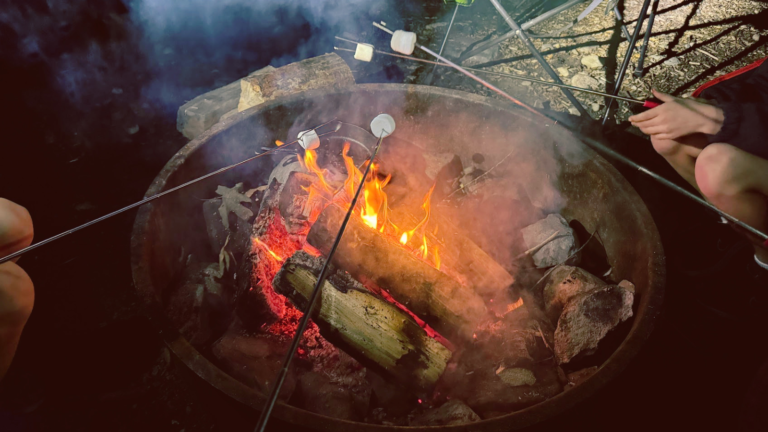
A coffee with a friend is not a luxury. A weekend camping trip with a few guys is not a reward you have to earn by finishing everything else first. A standing dinner that happens every month whether or not everything is handled — that is a health decision. The research says so. The men who built and kept real friendships lived better and longer. Not the men who were the best providers. The men who had people, the men who had male friends.
So grab the coffee. Plan the camping trip. Text the guy from the sideline you have been meaning to actually get to know for years. Not because you have time. You don’t. But because it is worth making the time.
It is okay to do this for yourself.
The guy hug is a fine start. It’s just not enough. Following through is.
Kevin Maguire’s Dadurdays groups are active in cities across North America, Europe, and Australia. If you’re looking for a local dad community or want to start one, visit thenewfatherhood.org.
Kevin also writes The New Fatherhood on Substack — worth your time.
Get the best of MLD
The real conversations men carry but rarely have out loud. Written in real time, by a guy walking the same road. Every Thursday.
SIGN ME UPFree — No spam ever